Summer Cross Stitch Font Review
A Handmade Vibe That Builds Brand Trust
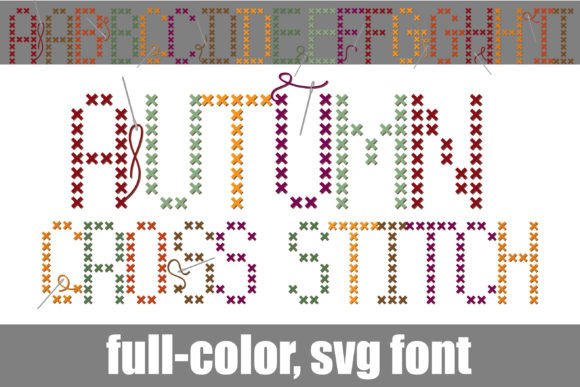
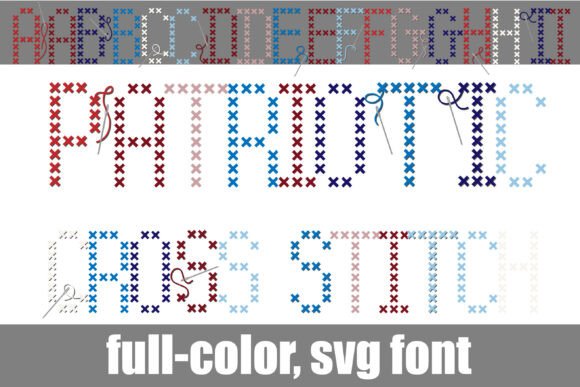
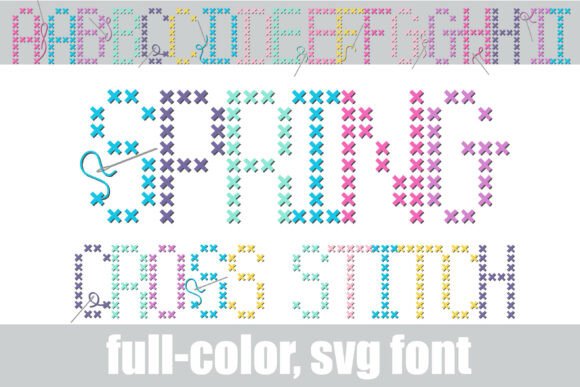
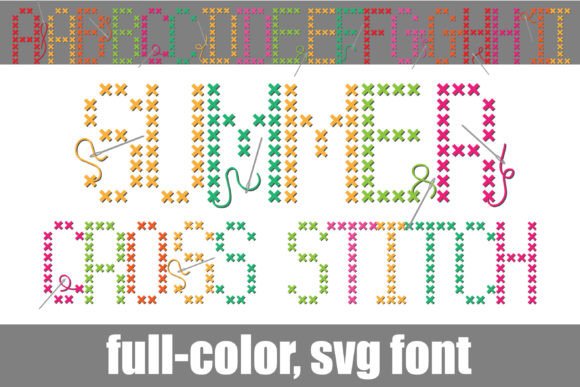
As an embroidery designer who’s digitized over 2,000 small business logos and branded patches, my first impression of Summer Cross Stitch is immediate and positive: it reads as friendly, artisanal, and seasonally grounded—without veering into cliché. The cross stitch style isn’t just decorative; it signals intentionality, craft, and human touch—qualities that resonate deeply with café owners, florists, bakeries, and handmade studios. Unlike generic script or block fonts, Summer Cross Stitch carries a quiet confidence: it feels premium because it’s detailed, yet approachable because it’s warm. The summer color palette—think coral, seafoam, sun-bleached yellow, and soft sage—adds instant seasonal relevance without locking your brand into June–August only. And those needle motifs in the uppercase? A subtle but brilliant nod to craft culture—ideal for embroidery shops, Etsy sellers, and creative studios building visual cohesion across merch and digital assets.
Where Summer Cross Stitch Shines in Real Business Use
Summer Cross Stitch excels where authenticity matters most: embroidered patches, apron embroidery, tote bag design, and cap embroidery for local businesses. On a 3”–4” woven or chenille patch, the font’s texture translates beautifully—stitch definition holds, and the cross stitch illusion reads clearly at arm’s length. For staff uniforms (think café aprons or boutique smocks), it adds personality without sacrificing legibility. When stitched on cotton canvas tote bags or linen tea towels, the font enhances perceived value—it says “handmade product,” not mass-printed promo item. As a chest logo accent on work shirts or a sleeve detail on denim jackets, it balances charm and professionalism—especially when paired with minimal iconography (e.g., a tiny sun or leaf beside the shop name). For event merch or customer gifts—like branded seed packets for a florist or mini linen pouches for a pet brand—it elevates unboxing moments and encourages social sharing. Even in printable mockups for client approval, Summer Cross Stitch delivers strong visual storytelling before a single thread is sewn.
Use With Intention—Not Everywhere
That said, Summer Cross Stitch isn’t universally scalable—and that’s okay. Its charm lives in its detail, which means caution is needed in high-density or constrained applications. Avoid using it for sub-2” embroidered patches or cap fronts under 2.5”, where needle motifs and fine color transitions may blur or collapse in stitch density. Curved surfaces—like the front of a structured baseball cap—require careful digitizing adjustments; the font’s full-color nature demands precise thread color registration, so test on real fabric before bulk production. On dark uniforms (navy, charcoal, black), verify contrast: some summer palette colors may fade visually without proper thread selection or underlay. Likewise, textured fabrics—burlap, heavy twill, or looped terry—can mute fine outlines. If your small business merch includes items meant for frequent washing (e.g., restaurant aprons or reusable produce bags), confirm thread durability and stabilizer pairing—this isn’t a “set-and-forget” embroidery file.
How It Strengthens Your Brand Identity
For small business owners, consistency *is* credibility—and Summer Cross Stitch supports that when used thoughtfully. It reinforces handmade presentation without looking amateurish, helping customers instantly associate your products with care and creativity. A bakery using it on custom pastry boxes and embroidered oven mitts builds recognition faster than a generic sans-serif ever could. A pet brand applying it to collar tags and bandana patches signals warmth and attention to detail—traits buyers trust. Visually, it anchors your design assets: pair it with clean line icons or soft watercolor illustrations, and you’ve got a cohesive system ready for packaging, social media, and in-store signage. Most importantly, it boosts buyer engagement—not by shouting, but by inviting closer inspection. Customers pause. They notice the needle. They remember the feeling.
Practical Embroidery Designer Notes Before You Digitize
- Always test in black and white first—to assess letter spacing, kerning, and negative space before committing to multi-color thread builds.
- Check performance at your smallest intended patch size—does the “S” still read as “S” at 1.75”? Does the needle stay distinct?
- Review thread color contrast on target fabric—especially if sourcing from multiple vendors or using eco-friendly threads with lower sheen.
- Inspect spacing between letters and words—cross stitch fonts can trap lint or cause thread breaks if kerning is too tight.
- Confirm hoop size compatibility—some color font variants require larger hoops for smooth color transitions.
- Test on real fabric with your standard stabilizer stack—a lightweight tear-away may not support dense color layers on knit blends.
- Create a physical or high-res printable mockup for client approval—clients respond better to tangible context than vector previews alone.
- Compare Summer Cross Stitch beside your existing design assets—does it harmonize with your logo, icons, and packaging typography?
- Verify commercial licensing before business use—as a Color Fonts product, ensure your license covers embroidery file creation, resale of finished goods, and digital distribution of mockups.
Final Thought: A Strategic Asset, Not Just a Pretty Font
Summer Cross Stitch isn’t just another decorative typeface—it’s a versatile, emotionally intelligent tool for small business merch and branded patch use. When matched to the right brand voice and applied with embroidery-aware discipline, it strengthens recognition, deepens customer connection, and quietly signals quality. Whether you’re a solo craftsperson digitizing your first Etsy listing or an established embroidery shop scaling custom apparel for local boutiques, this font earns its place in your design toolkit—not as filler, but as foundation. Just remember: respect its texture, honor its scale, and always test like your reputation depends on it. Because in the world of machine embroidery design and commercial embroidery, it often does.